Elmer Gates's
Online Library Collection
text and media downloads of the New Thought Works by Elmer Gates, including mp3's, eBooks and more...
Elmer Gates Bio & links Elmer Gates's Media files
More New Thought Resources:







You will find links to available downloads for a particular New Thought Work by Elmer Gates at the bottom of existing pages of that book.
This library should make your reading, research and writing projects easier. Fully processed books have yellow page scans links to check text accuracy. File numbers for .jpg and .htm files etc... match the original page numbers for accuracy and ease of use. This enables writers to create reference links for research or publication. Use it, send in additions and keep in mind that your support means more free books, better processing and more downloads.
"Unlike so many, we do not peddle the Divine word for profit."
~ 2 Corinthians 2:17
Serving New Thought presents the
Online Collection of New Thought Works
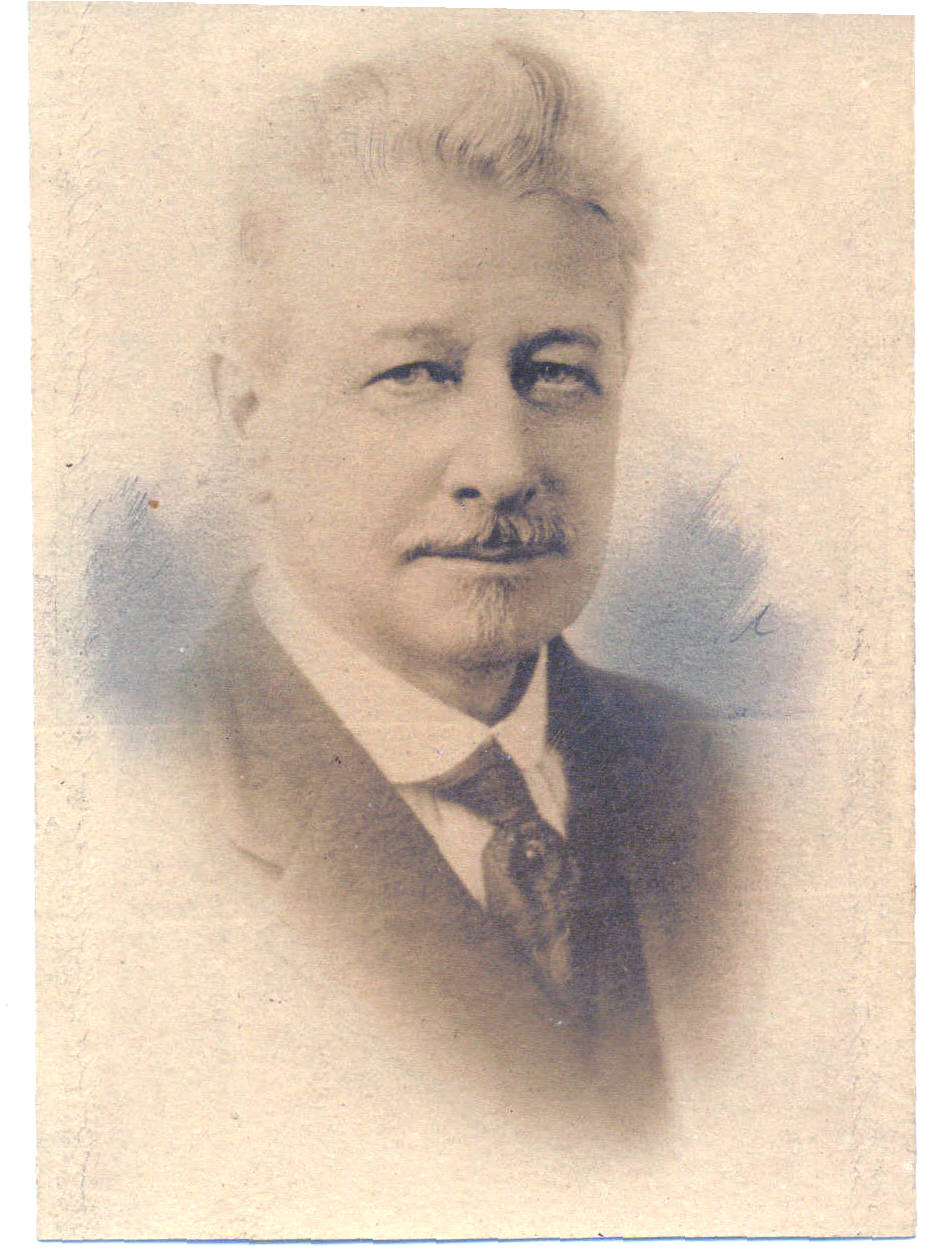
by Elmer Gates (1859-1923)
"Scientific Method is Mental Method"
"The metaphysical secrets within the works of these New Thought Authors contain mystic insights. There are programs which enable seekers to get more out of New Thought Media as well as the training essential to building a proper spiritual practice. Learn about New Thought and New Thought Today." ~ Avalon de Rossett
Elmer Gates, was a virtuoso inventor whose methods reveal the difference between New Thought versus New Age. Gates firmly believed in the scientific method. eschewing false tautologies in favor of definite connections and provable formulas in both thought and deed. His better known inventions include the foam fire extinguisher, an improved electric iron, a climate-controlling air conditioner, and the educational toy “Box and Blocks.”
Links to Elmer Gates's Works:
Within the spectrum of New Thought today, Elmer Gates stands firmly on the side of science, which serves as the foundation for thoughtful Millennials. Thus his work is favored by adherents to the Mental Science form of New Thought 3.0, as well as the evolving Science of Mind form of New Thought 3.0 which brings together the original work of John Bascom with the Religious Science form of Science of Mind taught by the Holmes brothers (Ernest and Fenwicke).
Gates contributions are found in numerous areas: X-ray, alloy casting, electrically operated looms, magnetic separation devices for mining etc... He developed instruments for refining muscular skill, created indoor replications of weather systems, and in the late 1800s Elmer invented an electronic music synthesizer. A 1904 Synopsis of Gates work listed thirty-five lines of inventive research in which results had been obtained. At the beginning of the 20th century, the Elmer Gates Laboratory in Chevy Chase, MD, was the largest private, non-commercial laboratory in the United States.
Elmer Gates is considered one of the great progenitors of New Thought 3.0 because he preferred to think of himself as a psychologist, pursuing invention primarily to study the processes of the mind. Elmer attributed his success as an inventory to his discovery of "psychotaxis," the integrated hierarchy of sensory discriminations used to create a valid mental representation of a given part of the physical world. He kept track of his work through years of recorded observations.
Gates cultivated his creativity through psychotaxis. In contrast to some online definitions, a more accurate definition is provided through the insights of the brilliant Lee Humphries, www.ThinkingApplied.com, who manages the premiere website which explores Elmer Gates life and work: http://elmergates.com
Psychotaxis is the combination of Psychology with Taxonomy. It means to sort and classify the available mental data with the object of arriving at higher understanding and deeper insight. Elmer Gates would first define a subject to explore, then begin the pscyhotaxic process: mentally sorting through each and every piece of sensory data that the subject at hand could impart, classifying each datum according to its perceived likeness to or difference from the other data. Having polled each sense with regard to the subject thereby acquiring, then categorizing each sensation evoked through mental interaction with the subject, Gates would then review the data in psycho-taxonomic order. Similar to the replaying of a symphony, he would recreate each sensation in his mind—moving through the series over and over until he could execute it at great speed. Normally this process would take several weeks. Similar to the rehearsal of a composition, the practitioner works through the psycho-taxonomic hierarchy of sensory associations -— giving rise to corresponding images, concepts, ideas, and thoughts. Systematic repetition / recollection of the psycho-taxonomic hierarchy increases the blood flow to the areas of the brain where that data has been enregistered and processed. Through this active process of review, or "refunctioning," the practitioner stimulates the those neurological connections which compose the mental structure of the subject being examined. The relation of each connection to other concepts is stimulated through a "dialectic" process which is similar to the tonal vibration evoked through the plucking of a string on a musical instrument. By mentally reviewing the manner in which the connecting concepts resolve themselves into each other, the practitioner senses their attunement or lack thereof. This results in new insights into the subject being thus explored.
With this master tool as the basis of his mental practice, Gates went on to discover and explore other aids to creativity: quiescence, periodicity, climate control (he invented an air-regulated isolation chamber), anabolic emotional states (he researched their chemistry and physiological effects), and linguistic mentation.
"Gates hypothesized that unusual mental activity produced unusual structural or chemical differences in the brain. To test his hypothesis, he conducted many experiments on guinea pigs, rabbits, dogs and himself -— sometimes using electric shock as a negative reinforcer (reportedly the first person to do so)."
Elmer Gates' experiments required test animals to make refined discriminations using a particular sense in order to carry out successful adaptive responses to their environment. Upon completion of the experimental training (which often lasted for months), the test animals and one or more control groups of like animals were chloroformed. The groups were then compared by a histological examination of the brain areas where the sensory data were enregistered. (To facilitate the examination, Gates invented a staining technique wherein electric current passed the stain through neurons in two different directions. He also made major improvements in the microscope’s magnification.) As he suspected, the neuronal structure was always more highly developed in the test group. Gates' conclusion was that rigorous training of the senses results in novel brain structures reflecting a differentiation in the mind's ability. Gates proposal was that with the proper stimulation in combination with conscious purpose, the mind could thus be expanded and additional creative powers would be the result.
This was crux of Gates premise: "scientific method is mental method,"
Gates devoted his life to the study of the Art of Mind-Using, or "psychurgy," as he named it. Elmer favored practical scientific exploration, rather than theory and speculation, formulating the "law of conscious knowing" which contrasts with magical thinking or faith based reality. He often stated that proponents of ideas should demonstrate their insights or provide him with the conditions necessary explore their claims or "prove true if given the opportunity."
Due to the unusual nature of some of his research, his work attracted the attention of those seeking facile answers to complex questions. Thus his studies were, at times, misinterpreted by the popular press, in particular the proponents of "Yellow Journalism" which is known today as "Infotainment." When such writers could not find statements to their liking, they simply fabricated quotes which they attributed to Gates. The Faux news of the day purported that Elmer Gates had 'seen the shadow of the departing soul of a dying rat,' or 'found that the color of sin is pink,' or that Gates obtained his ideas through 'telepathy from the minds of other inventors.' Elmer Gates worked to correct these faux reports, but the profits made through disingenuity provided the fuel for yellow journalism to outpace the truth. Today, some of these confabulations live on within the works of lesser writers featured in the "self-help" and "new age" sections of today’s bookstores.
As we build this library collection of the works of Elmer Gates, we will do our best to clear up the confusion between what constitutes New Thought versus New Age. It is this confusion that creates a quagmire into which less discerning minds can become entrapped. In the meantime, we invite you to find out more about Elmer Gates at: ElmerGates.com
On January 23, 2008, the papers of Elmer Gates were acquired by the Smithsonian Institution's Lemelson Center for the Study of Invention and Innovation at the National Museum of American History, Washington, D.C., and catalogued as Collection AC1123.
Archives by Title ~ / ~ Archives by Creator

FindACenter.com
Discover a rainbow of exciting New Thought Communities around the corner and around the globe.
Find FellowshipDivine Journal
Daily Wisdom from today's New Thought Leaders supports your Spiritual Journey with insights and affirmations.
Daily WisdomNew Thought Talks
Interviews with New Thought Sharers around the world & explorations of current themes in New Thought
New Thought Talks-

NewThought.NET/work
Manifest Your Dreams
NewThought.NET/work"Together we make a difference."
This is Ancient Wisdom.
"Diversity is strength!"
Register NOW
NewThought.NET/work = the Power of WE -
Serving New Thought
New Thought News put to use
NewThought.NET/workNew Thought Leaders "are life long learners"
Learn the hidden wisdom.
Library patrons support the library and get first notices and more ...
Register NOW
NewThought.NET/work = the Power of WE
Great New Thought Resources:






A Powerful Collection of Spiritual Resources
We give you a powerful platform upon which to do God's Work learning and sharing New Thought:
DivineJournal.com, NewThoughtCommunity.com, NewThoughtTao.com and many more ...
Use DivineJournal.com to Research, read & write New Thought Texts which you can share through NewThoughtBook.info.
New Thought Resources accessible to anyone in the world with an internet connection.
Find New Thought Communities around the corner & around the world.
FindACenter.com, NewThoughtCentres.com, NewThoughtCenters.com
Celebrating New Thought Diversity in thought and form, we weather all storms, thrive and prosper! NewThoughtDay.com, NewThoughtWeek.com
New Thought Holidays
New Thought Day was declared by James Edgerton on August 23rd, 1915
During research while expanding the free New Thought Library,
one of the ministers came across an interesting quote from early New Thought Alliance President James A. Edgerton:
"'The truth, once announced, has the power not only to renew but to extend itself.
New Thought is universal in its ideals and therefore should be universal in its appeal.
Under the guidance of the spirit, it should grow in good works until it embraces many lands and eventually the whole world.'
~
New Thought Day, August 23rd
, 1915."





NewThought.NET/work Serving New Thought
A growing collection of resources supported by a vast and expanding team of volunteers around the globe.

New Thought Radio
Talks by New Thought Spiritual LeadersUplifting Messages from New Thought Communities around the world.
Listen to New Thought Radio broadcasts from the New Thought Streams PodCast Archive, along with a growing collection of New Thought Music directly from New Thought Artists around the world.
Listen to New Thought Radio 24/7/365
New Thought Day
August 23rd
100 years old
1st declared by James Edgerton in 1915
"'The truth, once announced, has the power not only to renew but to extend itself. New Thought is universal in its ideals and therefore should be universal in its appeal. Under the guidance of the spirit, it should grow in good works until it embraces many lands and eventually the whole world.' ~ James A. Edgerton, New Thought Day, August 23rd, 1915."
New Thought Holidays August 23rd
DivineTao.com ~ since 2003
Be as water, as you are ...The New Thought Tao
Explore the New Thought Tao and discover deeper wisdom. New Thought has many forms, Taoist New Thought brings insights to the table that are not so apparent in Abrahamic forms. While many Abrahamics fight to impose their views on the rest of the world. Taoist New Thought teaches the way of acceptance and understanding. Principles in the New Thought Tao provide powerful processes which serve as keys to deeper happiness and inner peace from the inside out.
Read Divine Tao #8 "Water" Tao #8
New Thought Conferences
Grow and thrive Share your truthNew Thought conferences from various New Thought denominations and organizations are happening all ove rthe world. Whether Old New Thought or New Thought Today, find conference info about New Thought Conferences!.
New Thought Conferences Share
New Thought Solutions
Conscious Ministry Grow and thrive!New Thought Solutions for New Thought Sharers and New Thought Communities. Empowerment programs that awaken us to the co-creative "Power of We." Grow and thrive sharing a rainbow of New Thought wisdom with the world.
New Thought Solutions Thrive!
Books from contemporary New Thought Writers
NewThoughtBook.infoA growing collection of New Thought books from Today's New Thought Leaders. Many New Thought books lack the marketing necessary to get them in front of you, with New Thought Books INFO those writers to find you and you to find those writers...
New Thought Books Read!